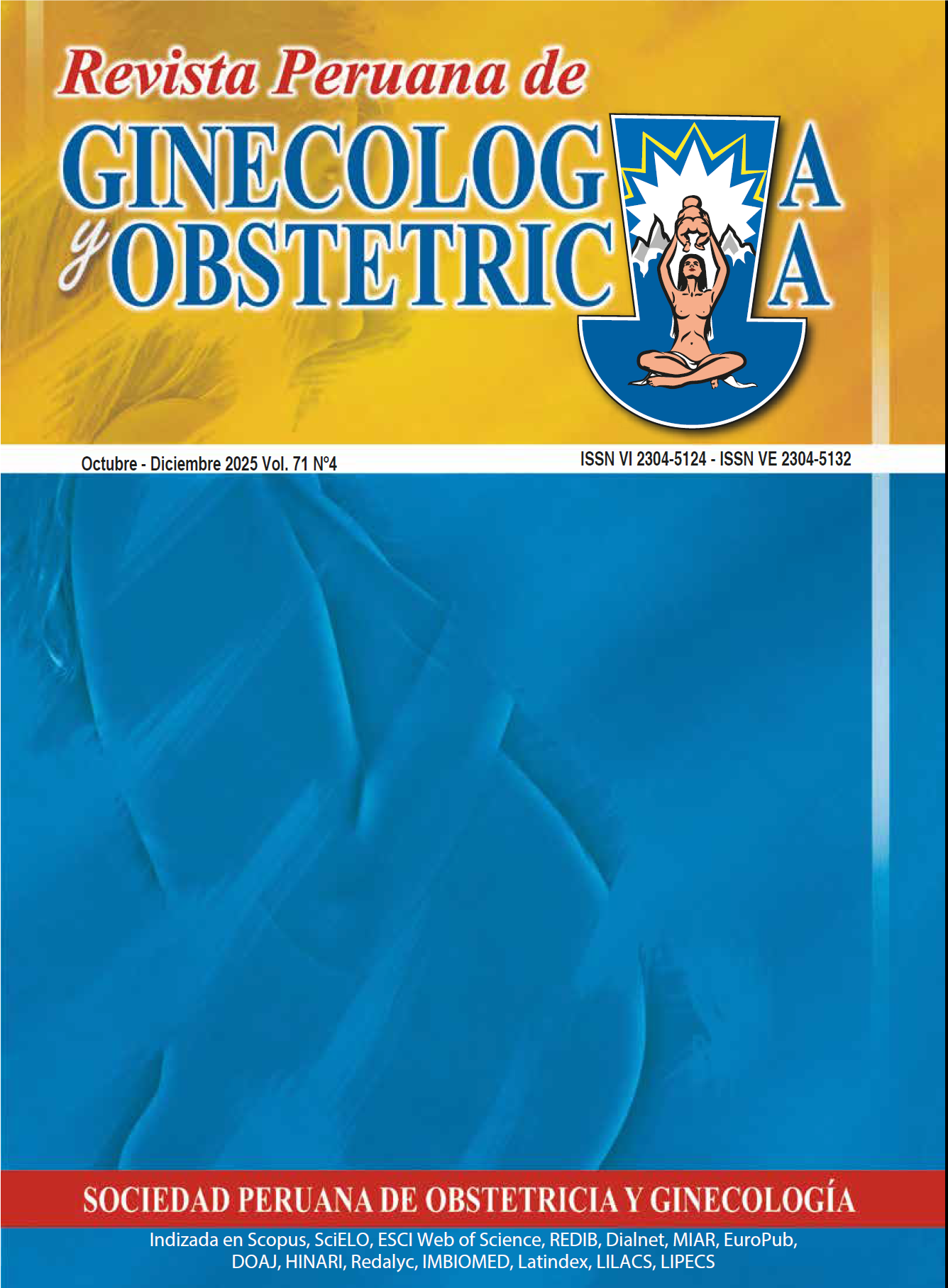
Therapeutic management of incomplet espontaneous abortion in women at a hospital in Lima, Peru
DOI:
https://doi.org/10.31403/rpgo.v71i2821Keywords:
Abortion, Incomplete, Watchful Waiting, Misoprostol, Vacuum Curettage, Dilatation and CurettageAbstract
Introduction: In Peru, an estimated 350,000 abortions occur annually, with complications representing the fourth leading direct cause of maternal mortality.
The majority are incomplete spontaneous abortions, associated with factors such as diabetes, hypertension, and thyroid disease. Three management approaches exist: expectant management, medical management, and surgical management. No national consensus exists for the management of this condition. Objective: To describe
the characteristics of management for incomplete spontaneous abortion in women aged 18–45 at Hospital III Suárez Angamos. Materials and Methods: A retrospective, observational, descriptive study was conducted using electronic medical records of women aged 18–45 diagnosed with incomplete spontaneous abortion between June
1 and December 31, 2024. A total of 321 participants were included. Results: Most women were 18–34 years old (62.9%), 3.4% had complicated abortions, and 15.0% presented comorbidities. Medical management with misoprostol was most commonly used (53.9%), followed by surgical management (36.1%), which was more frequent in cases with endometrial thickness ≥30 mm and uterine size ≥12 cm. Some patients managed expectantly or with medical management required additional treatment, over 60% of which involved misoprostol. Conclusions: Medical management was the
first-line approach for incomplete spontaneous abortion. However, limited evidence remains regarding clinical parameters, such as endometrial thickness, which are essential to guide treatment choice and confirm its success.
Downloads
Downloads
Published
Issue
Section
License
Copyright (c) 2026 Samanta Dayana Alvarado-Franco, Claudia Lezama-Aedo, Daniela Vanessa Estela Romero-Rivero

This work is licensed under a Creative Commons Attribution 4.0 International License.
Esta revista provee acceso libre inmediato a su contenido bajo el principio de que hacer disponible gratuitamente la investigación al publico, lo cual fomenta un mayor intercambio de conocimiento global.